Showing posts with label blogging. Show all posts

Tuesday, December 10, 2013

And it is a kind of good deed to say well; And yet, words are no deeds.

After this year's Nobel prize winner and editor of glam mag eLife Randy Schekman announces a boycott to (other) glam magazines, several interesting comments appeared through twitter. This pursuit for glam hits close to home since I've seen first-hand the transition of arguments from "it's a sad necessity" to "that's how it should be done, space is limited" -- even without realizing that this scarcity is artificial.

What is wrong with scientific publishing and how to fix it. : gg
Ok, so let’s assume tomorrow morning CNS cease to exist. They close down. How does this solve the issue? It doesn’t. CNS are not damaging Science. They are simply sitting on the very top of the ladder of scientific publishing and they receive more attention than any other journal. Remove them from the top and we have just moved the problem a bit down the ladder, next to whatever journal is following.
I think you might be a hypocrite | opiniomics
I wrote a blog post recently called “We didn’t ask for it”, and in case you missed the subtle nuance (!) of the post, what I was trying to say is that if you’re an established scientist, a tenured professor with hundreds of peer-reviewed papers behind you, and especially if you’re a man, you don’t get to tell people like me that the system is broken, because you’re the one who broke it!!!
I disgree with many points of the text above, but the idea is sound. It's not about pointing fingers (why can't men complain about gender issues? By being born a man you're at fault?), it's about talking the talk and not walking the walk. Which applies equally to politicians alike.
An Alternative to Schekman’s Boycott of Luxury Journals | Telliamed Revisited
Now let’s make a few small changes. I don’t think the words I’ve substituted are any less true than those that Prof. Schekman wrote.  I’ve changed only those words in italics:
“These luxury universities are supposed to be the epitome of quality, training only the best students. Because funding and appointment panels often use place of degree as a proxy for quality of science, obtaining degrees from these institutions often leads to fellowships and professorships. But the big universities’ reputations are only partly warranted. While they produce many outstanding scientists, they do not produce only outstanding scientists. Neither are they the only producers of outstanding scientists.”

So, will Prof. Schekman and his group also avoid luxury universities, and will he encourage others to do the same?
The problem is not the existence of glam journals, it's a system that gives disproportionate weight to them, and our even more unreasonable preference for such venues. So we cannot blame the overhyped magazines for making all kinds of arbitrary demands and creating schizophrenic standards. We crave for them, and we are willing to inflate our claims and to distort the narrative of our manuscripts, to divide our work's ouput into as many papers as we can, to avoid risky research and to follow bandwagon subjects, and to reject other people's manuscript for the quaintest disagreement (as e.g. their failure to inflate the claims and to distort etc.)

BTW, this discussion reminded me that it should be a concern that more and more scientists are not ashamed of parading their economic ignorance (instead of, let's say, recognizing our limitations as we should in all academic areas we have no first-hand expertise). It will certainly hurt us in the long term, first because we start to resemble creationists: refuse to study for fear of perceived consequences, reading instead excuses created by equally ignorant others; rejection of recognizing the field as a science, laying ground for an alternative but "inconvinent" version of the field; claim that knowledge of this 'deeper' version excuses the lack of familiarity with the field; lack of capacity to pass a first-year course on the discipline. Second, because people versed in the discipline may have less incentives to take us seriously (in the same way as we ignore claims made by quacks), and they will just stop listening.
To finish on a lighter tone, two nice tweets commenting on the boycott:

Sunday, February 24, 2013

Criticizing ENCODE -- who is your target audience?

First, a few links to commentaries on the latest article criticzing the ENCODE hype:

Biomickwatson’s Ridiculous Criticism of ENCODE Critics « Homologus

Spanking #ENCODE | The OpenHelix Blog

So I take it you aren’t happy with ENCODE… | The Finch and Pea

Scientists attacked over claim that 'junk DNA' is vital to life | Science | The Observer @ The Guardian

ENCODE, Apple Maps and function: Why definitions matter | The Curious Wavefunction, Scientific American Blog Network

Dear ENCODE…. | opiniomics

ENCODE gets a public reaming » Pharyngula

Graur et al. to ENCODE: Zing! « Genomicron

The ENCODE Controversy And Professionalism In Science | Scilogs

To me, one aspect of the ENCODE project that has been neglected is the moral hazard it enforces on the publication process. The concerted publication of 30 papers in practice prevents an objective peer review: 1) the publication is guaranteed; 2) the reviewer will feel responsible for the delay in case of honest concerns; 3) it is hard to find good reviewers if 'everybody' in the field is a coauthor (therefore you might have endogamic or non-expert reviewing). It also weakens the interpretation (value) of an academic article, shifting the importance of a discovery from the article itself to the number of articles. We should be struggling to create better measures of 'impact', and not stimulating the abuse of the current ones.

But another aspect of this discussion that is particularly relevant to me is the problem of the tone.


Critical analyses of high-profile works never receive the same attention -- they are seldomly published in the same venues and are not always easy to follow. Grand conclusions are easier to grasp than more boring details and conditions. I have no answer to that -- while I do prefer a calm and objective response, I have first-hand experience that cordial arguments are more easily dismissed. And some times what is perceived as a personal attack by some is simply an objective statement that happens to put the criticized researchers in a less-than-comfortable position. In the end it is a matter of choice between convincing the opponent or the audience.

Oh, and there's also another element that we should take into account when criticizing other people's work: how well we have our backs covered. I cannot pretend that there are not vindictive professors out there that will not hesitate in painting us with the scarlet letter at the smallest sign of threat. Many scientists are miserably gregarious.


Update 2013.04.11: There's a longer comment from Dan Graur that expands on some of my observations.

Wednesday, May 18, 2011

Cleanliness is next to godliness

At the Red Queen blog of the Brazilian scienceblogs there's an ongoing discussion on a post about the use of the white coat - by clinicians, but not only - outside of the clinical premises. There's even a picture where we can see almost everybody gowned up at the cafeteria of the medical school...

I remember working in such a setting, and I always felt uneasy seating beside someone with a lab coat saying "hematology" or "parasitology" and sharing the jar of orange juice. Besides the garment, we already had our badges and other displays of hierarchy. But I had some friends who told me that it's common to have two coats, one for "inside" (=working) and another one for "outside" (=showing), specially in high profile hospitals. BTW I didn't use one at this time, and in my lab activities from high school and undergrad days I had a blue collar coat used by lathe operators.

Anyway, I was curious about the real, established risks of parading with a lab coat inside and around a hospital, and so as usual I started digging for references. Here are some articles that analyzed hospital uniforms for the presence of pathogens - the list is very incomplete, so additions are welcome!

Bacterial flora on the white coats of medical students (Journal of Hospital Infection (2000) 45(1): 65-68):
This study has demonstrated that the white coats of medical students are more likely to be bacteriologically contaminated at points of frequent contact, such as the sleeve and pocket. The organisms identified were principally skin commensals including Staphylococcus aureus. The cleanliness of the coat as perceived by the student was correlated with bacteriological contamination, yet despite this, a significant proportion of students only laundered their coats occassionally. This study supports the view that the students' white coat is a potential source of cross infection on the ward and its design should be modified in order to facilitate hand washing. Hospitals training medical students should consider taking on the burden of providing freshly laundered white coats for the students.
The Endangered White Coat (Clin Infect Dis. (2010) 50 (7): 1073-1074):
Although little clinical evidence exists regarding the impact of these potential fomites on NI, some data seem to give credence to the thought that clothing may play a role in transferring pathogens. Several studies have shown that physicians' white coat sleeves and pockets are frequently colonized with bacteria associated with NI[12–15]. Mackintosh et al [16] also showed that several pathogens transferred well from fabrics to hands. Scott et al [17] showed that several types of pathogens can be transferred from contaminated soiled cloth and surfaces to fingertips in detectable numbers. In a costbenefit analysis, Puzniak et al [18] showed that gown and glove use together lowered the incidence of vancomycin-resistant enterococci infection in a medical intensive care unit, which would seem to support the claim that clothes are a potential fomite for NI.
Bacterial contamination of health care workers' white coats (AJIC: American Journal of Infection Control (2009) 37 (2): 101-105):
Among the 149 grand rounds attendees' white coats, 34 (23%) were contaminated with S aureus, of which 6 (18%) were MRSA. None of the coats was contaminated with VRE. S aureus contamination was more prevalent in residents, those working in inpatient settings, and those who saw an inpatient that day. This study suggests that a large proportion of health care workers' white coats may be contaminated with S aureus, including MRSA. White coats may be an important vector for patient-to-patient transmission of S aureus.
The health professional's role in preventing nosocomial infections (Postgraduate Medical Journal (2000) 77 (903): 16-19):
Gloves, gowns, and masks have a role in preventing infections, but are often used inappropriately, increasing service costs unnecessarily. While virulent microorganisms can be cultured from stethoscopes and white coats, their role in disease transmission remains undefined. There is greater consensus about sterile insertion techniques for intravascular catheters—a common source of infections—and their care. By following a few simple rules identified in this review, health professionals may prevent much unnecessary medical and financial distress to their patients.
Survival of Enterococci and Staphylococci on Hospital Fabrics and Plastic (Journal of Clinical Microbiology (2000) 38 (2): 724-726):
The transfer of gram-positive bacteria, particularly multiresistant Staphylococcus aureus (MRSA) and vancomycin-resistant enterococci (VRE), among patients is a growing concern. One critical aspect of bacterial transfer is the ability of the microorganism to survive on various common hospital surfaces. (...) Antibiotic sensitivity had no consistent effect on survival. The long survival of these bacteria, including MRSA and VRE, on commonly used hospital fabrics, such as scrub suits, lab coats, and hospital privacy drapes, underscores the need for meticulous contact control procedures and careful disinfection to limit the spread of these bacteria.
How Important Is the Environment in the Emergence of Nosocomial Antimicrobial-Resistant Bacteria? (Clin Infect Dis. (2008) 46 (5): 686-688):
Numerous studies have demonstrated that the environment of a patient's room can become colonized with bacteria, such as Acinetobacter species, VRE, Clostridium difficile, and methicillin-resistant S. aureus, as well as with viruses, such as influenza virus and norovirus [8]. But the importance of this colonization in leading to patient-to-patient transmission has not been shown with a high level of scientific evidence.
Survival of Nosocomial Bacteria and Spores on Surfaces and Inactivation by Hydrogen Peroxide Vapor (Journal of Clinical Microbiology (2009) 47 (1): 205-207):
In summary, we found that dried inocula of a range of nosocomial pathogens survived on surfaces for several weeks but were rapidly inactivated by HPV in a 100-m3 room. HPV has a potential role in decontaminating surfaces and equipment contaminated with such organisms.
Antibacterial and Laundering Properties of AMS and PHMB as Finishing Agents on Fabric for Health Care Workers' Uniforms (Clothing and Textiles Research Journal (2007) 25 (3): 258-272):
This study examined whether antibacterial finishes can effectively reduce the presence of bacteria on fabric used for health care workers' uniforms (HCWUs). (...) PHMB-treated specimens had a significantly larger reduction against both Staphylococcus aureus and Klebsiella pneumoniae bacteria before laundering and after 5, 10, and 25 laundering cycles than did AMS-treated specimens and no-treatment specimens.
Survival of Some Medically Important Fungi on Hospital Fabrics and Plastics (Journal of Clinical Microbiology (2001) 39 (9): 3360-3361):
These data indicate that many of the fungi (Candida, Aspergillus, Mucor, and Fusarium) which are associated with nosocomial infections in patients survived for at least a day and often longer on fabrics and plastics routinely used in hospitals. (...) While similar data do not exist for other fungi,the findings that other fungi can exist for extended periods on common hospital fabrics and plastics suggest that similar transfers from contaminated materials to hands, and vice versa, are likely. These survival data indicate that in this age of increasing antifungal resistance, when treatments for patients are becoming more limited, appropriate disinfection of the environment and conscientious contact control procedures are essential for optimal control of infections in hospitals.
Laboratory instrument contamination with dermatophytes – a risk for dermatophytosis (Letters in Applied Microbiology (2007) 44 (1): 112-113):
Nocardia asteroides and S. schenckii were also isolated from a shelf and a lab coat. Dermatophytes are a group of pathogenic fungi that invade keratinized tissues. Thus, the presence of dermatophytes on laboratory equipment is a risk for dermatophytosis. Dermatophytoses are common fungal infection of humans, and are considered to be one of the major public health problems in the world. User interfaces of laboratory instruments in medical mycology laboratories, such as microscopes, centrifuges, balances, flame and so on, may serve as potential reservoirs for the transmission of fungi.
Study Finds Lab Coat to Skin MRSA Transmission - Skin & Allergy News:
Researchers at Virginia Commonwealth University in Richmond used pigskin as an in vitro model to demonstrate that large inoculums of methicillin-resistant Staphylococcus aureus (MRSA), vancomycin-resistant enterococci (VRE), and pan-resistant Acinetobacter (PRA) bacteria could be transferred from a white cotton lab coat to pigskin 1 minute, 5 minutes, and 30 minutes after inoculation.
Bacterial contamination of uniforms (Journal of Hospital Infection (2001) 48 (3): 238-241):
Microbiological sampling of nurses' uniforms was undertaken using a Casella slit sampler. Staphylococcus aureus, Clostridium difficile and vancomycin-resistant enterococci were detected on uniforms both before and after a span of duty. Recommendations for provision and changing of nurses' uniforms are made.
Survival of nosocomial bacteria on hospital fabrics (Indian J Med Microbiol (2003) 21 (4): 291):
The results indicate that nosocomial bacteria can survive for many days on fabrics. The survival time observed by us is longer than that reported in a previous study.[4] This could be due to higher inoculum used by us. The effect of inoculum concentration on cell viability is dependent on the concept of cryptic growth in which bacteria in a nutrient limiting condition can live on nutrients from dying cells.[5] Further, gram negative bacilli were not included in the previous study.


Sunday, January 30, 2011

Can you watch a movie better than your neighbor?

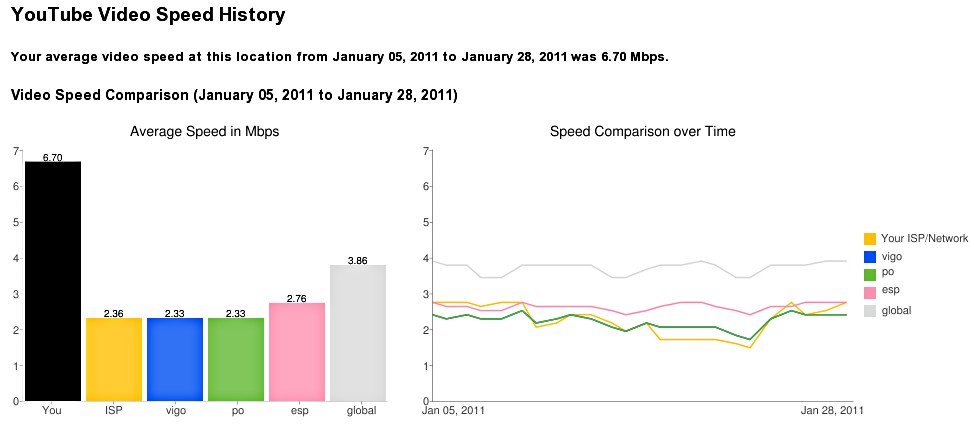
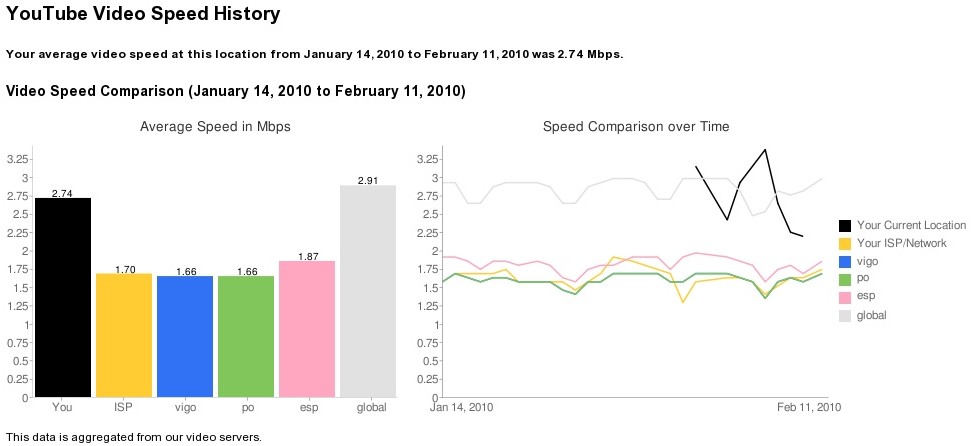
I received (via twitter) this comparison charts between ISP providers, based on HD streaming from Netflix. My provider offers a "speedometer" test, but I don't know of an initiative similar to Netflix here in Spain. What I do know is that YouTube also has a speed comparison based on our streaming history.

This is my current result, from YouTube:

My YouTube video speed for Jan 2011.
"Vigo" is the city, "po" is the district of Pontevedra and "esp" is Spain.


And the same test, from one year ago:

My YouTube video speed for Jan 2010.

For completeness, here are the results from my ISP's test (the most recent):

My R speedometer results from Jan 2011. (R is the ISP provider, not the statistical environment).

(It goes without saying that I'm not trying to make any deep statistical analysis here, I'm just playing with the tools...)

Tuesday, January 25, 2011

The spinach protocol of communication

In my lab we recently started playing with softwares to improve communication - we have to manage the computers, web servers, articles and meetings, and e-mail is not enough. At the same it must not be something too complex, or otherwise people will simply not use it - or worst, use it wrongly and have a false confidence of correctness. (If you are curious, we are testing an internal blog, google reader, google docs and later Mendeley/Zotero as shared solutions).

My personal goal is that we can all achieve the hourensou model of communication. I know this term is also a management mumbo jumbo, but in Japan it's something much more prosaic, that all students learn and that pervades all relations - at least between responsible members of the society. I also have a feeling that it is a polite way of avoiding conflicts within the hierarchical system.

The word hourensou means spinach, and the saying goes that we should always eat our spinach. But in our case, the hourensou is an acronym for houkoku, renraku and soudan. Houkoku (報告) means "reporting", "informing"; renraku (連絡) means "contact", "to get in touch"; and soudan (相談) means "consultation" or "counseling". So the habit of eating your spinach means to have a smooth communication channel with your colleagues, for example with the regular reporting of all relevant activities, asking before changing/removing something, and always allowing for feedback.

The idea is to eliminate the "didn't you get the memo?" syndrome, and to shift the responsibility from the receiver of the information to the sender. Obviously you don't need to work in a Japanese company to know that: anyone who helped maintaining collaborative projects or developed open source software should be familiar with the ChangeLog files, for example. In my case I learned to always report my activities and respond to requests when I was an undergrad and we the students were responsible for administrating a server. Even after many years away, I still know pretty accurately the situation of this machine thanks to the culture of hourensou we developed.

Tuesday, June 29, 2010

Intellectual Property around the tubes

Helpless Mainstreamers Grappling with Intellectual Property (Stephan Kinsella):
A recent CNET video on “Intellectual property rights vs. journalism” shows a Stanford University’s Innovation Journalism conference on June 7, with a panel discussion by various mainstreamers discussing the quesion “Is intellectual property protection a threat to journalism?” The lack of libertarian principle and sound economics has these commentators floundering as they discuss various cases where IP infringes free speech and freedom of the press. Lacking any principled approach they retreat to legal positivism, talking about how the Constitution protects both freedom of the press and speech as well as IP rights, so some “balance” must be made. Without Austrian economics and libertarian principle, even well-intentioned people, who sense that something is wrong, are helpless before the state’s propaganda and onslaught of legal positivism.
Copyright as a Moral Hazard (Jeffrey Tucker):
You can tell that intellectual property rights are not real property rights just from this very interesting item on BoingBoing, a report on round one of the Google vs. Viacom case. With real property rights, people do not usually go around actively violating their own rights in order to collect from innocent defendants. I’m not even sure I understand how that would work in a case of real property rights. But in this Viacom case:
Filings in the case reveal that Viacom paid dozens of marketing companies to clandestinely upload its videos to YouTube (sometimes “roughing them up” to make them look like pirate-chic leaks). Viacom uploaded so much of its content to YouTube that it actually lost track of which videos were “really” pirated, and which ones it had put there, and sent legal threats to Google over videos it had placed itself.
Why would Viacom have done that if the company really believed that these postings were hurting its business? Perhaps they believed they would help the business: promoting its product and creating an opportunity for legal blackmail.
Was Napster Right?: Is this what they mean by analog hole? (David K. Levine):
Having trouble with DRM on your ebooks? Try this site. The problem with DRM is it encourages piracy. It can always be removed - but it can be a hassle. So: if you are going to distribute it widely it is worth the effort - and if you take the trouble to do it yourself you are so pissed off that you feel a strong temptation to share it. Irritating your customers hasn't proven a winning business model in the past.
Ideas vs. Execution Shows Why Competition Is A Good Thing (Mike Masnick):
Similarly, just because there are so many companies in a market, it doesn't mean any of them are really executing well (...) In fact, this succinctly reiterates a whole bunch of the points that we've discussed repeatedly over time. First, there's a big difference between ideas and execution. Just because others are in the market (and even well established), it doesn't mean you can't do a better job. It also highlights the difference between invention and innovation, where invention is just coming up with something new, but innovation is really bringing it to market successfully. Facebook and Google are both great examples of innovative companies who didn't really "invent" their initial markets.


Enhanced by Zemanta

Wednesday, May 5, 2010

It is hard to evaluate innovations when you have something to loose with them

There is a post at the Scholarly Kitchen that is receiving a lot of attention. Since I strongly disagree with its content, I will quote instead an interesting critique on its commentary area:
Efficiency is exactly the debate scientists, authors, and publishers need to be having. I don’t know what efficiency looks like, but putting pressure on authors to submit to high-ranking generalist journals when their stuff would be better suited to a niche outlet isn’t efficient for scientists or publishers. Forcing libraries to subscribe to Big Deals for a bunch of stuff they don’t want isn’t efficient nor is it good reader service. In fact, patting yourself on the back for your selectivity is hypocritical when you also force the library to carry the other journals that the rejected manuscripts end up in.
We can find other adequate responses here, here and here, for instance. Another point is that we cannot use journal ranks to evaluate a scientist or a research.

Thursday, April 1, 2010

[links] flaxseed, unpublished results, gene patenting and some comments

CBC News - Film - Japanese vets admit on film to Nanjing atrocities:
On Dec. 13, 1937, Japanese troops marched into Nanking and murdered 300,000 Chinese people, including many civilians, in a six-week orgy of violence. Chinese authorities say as many as 20,000 women were raped. Japanese historians and journalists refer to the event as an "incident" and many deny the casualty rate was so high.
Lula Succession Race Starts as Rousseff, Serra Resign - BusinessWeek:
Rousseff, a former member of Brazil’s Marxist underground who has never run for office, may increase public spending, Bank of America said. Serra, who as recently as July 2009 newspaper column criticized Brazil’s “stratospheric” interest rates and strong exchange rate, raises questions about how independent the central bank would be under his government, the bank said.
Short Sharp Science: Is this the end of gene patenting? - New Scientist:
A court in New York yesterday ruled that patents on two genes linked to breast cancer are invalid. By declaring that the genes can't be patented because they are essentially products of nature rather than inventions, the US District Court for the Southern District of New York state has effectively cast doubt on whether patents on 2000 other human genes - around 20 per cent of the total - are valid, The Times of London reports.
Animal studies paint misleading picture : Nature News:
Published animal trials overestimate by about 30% the likelihood that a treatment works because negative results often go unpublished, a study suggests. This is a surprisingly strong bias, says the study's lead author, Malcolm Macleod, a neurologist at the Centre for Clinical Brain Sciences at the University of Edinburgh, UK. The work, published today in PLoS Biology, analyses the effect of publication bias in animal models of disease.
Flaxseed lowers high cholesterol in men, study suggests - Science Daily:
Suzanne Hendrich, an ISU professor in food science and human nutrition, led a study that examined the effects of flaxseed lignan in 90 people diagnosed with high cholesterol. The results showed that consuming at least 150 milligrams of flaxseed lignans per day (about three tablespoons) decreased cholesterol in men, but not women, by just under 10 percent over the three months that they were given the flaxseed. While Hendrich admits that's considerably less than the expected outcome from cholesterol-lowering drugs -- approximately 10 to20 percent for three months, depending on the individual -- it's still enough to make flaxseed a more natural option for some men.

PS: I still haven't found a good formula for when to publish here and when to publish on my rant blog... as long as nobody complains I won't think too much about it. I'm liking this tumblr blog, it doesn't take up my time and I have more freedom than on twitter. For now I use it as a fancy bookmark. And I know that writing too many twitter updates is not an effective approach. On a related note, I had to stop following a lot of interesting tweeters and then I set up a twitter list so that I can read them on my spare time using hootsuite. Which means that I won't be following them on real time...

LinkWithin

Related Posts with Thumbnails