Showing posts with label education. Show all posts

Wednesday, July 5, 2017

Dangers of chiropractic manipulations -- selected articles

what follows below is just a (non-exhaustive) dump of articles mentioning problems associated with chiropraxis and osteopathy.

The risk associated with spinal manipulation: an overview of reviews (10.1186/s13643-017-0458-y)
The most frequently described adverse events (AEs) were stroke, headache, and vertebral artery dissection. Fifty-four reviews (46%) expressed that SMT [Spinal manipulative therapy] is safe, 15 (13%) expressed that SMT is harmful, and 49 reviews (42%) were neutral or unclear. Thirteen reviews reported incidence estimates for SAEs, roughly ranging from 1 in 20,000 to 1 in 250,000,000 manipulations. Low methodological quality was present, with a median of 4 of 11 AMSTAR items met (interquartile range, 3 to 6). Reviews meeting the requirements for each of the AMSTAR items (i.e. good internal validity) had a higher chance of expressing that SMT is safe.
It is currently not possible to provide an overall conclusion about the safety of SMT; however, the types of SAEs reported can indeed be significant, sustaining that some risk is present. High quality research and consistent reporting of AEs and SAEs are needed.
Cerebral Hemorrhage Following Chiropractic Activator Treatment – Case Report and Review of Literature (10.1055/s-0036-1597626):
Background Despite widespread utilization of chiropractic treatment for various ailments, there is a paucity of documentation regarding intracerebral hemorrhage related to chiropractic trauma. Stroke has been reported from cervical manipulation, although with a suggested low incidence. Activator treatment, an instrument that produces a high-velocity, low-amplitude impact to the spine, is considered especially safe. There are no prior reports of intracerebral hemorrhage resulting from a chiropractic activator treatment.
Case Description A 75-year-old woman was admitted to the hospital with a history of headaches, visual difficulties on the right, and speech disturbance of relatively acute onset. CT scan showed a brain hemorrhage in an unusual location. Extensive evaluation was undertaken because this was thought to be a spontaneous event. No cause was found on imaging. Subsequent history revealed a chiropractic activator treatment applied directly to the junction of the back of her head and the upper cervical spine immediately prior to the onset of symptoms. Her clinical course is described.
Conclusions This appears to be the first report linking traumatic intracerebral hemorrhage with a chiropractic activator treatment. The use of this modality in an elderly population, with widespread utilization of anticoagulants and platelet inhibitors, is of potential concern.
Assignment of adverse event indexing terms in randomized clinical trials involving spinal manipulative therapy: an audit of records in MEDLINE and EMBASE databases  (10.1186/s12874-017-0320-x) :
Results Of the 140 papers, 91% were MEDLINE records, 85% were EMBASE records, 81% were found in both MEDLINE and EMBASE records, and 4% were not in either database. Only 19% mentioned adverse event-related text words in the title or abstract. There was no significant difference between MEDLINE and EMBASE records in the proportion of available papers (p = 0.078). Of the 113 papers that were found in both MEDLINE and EMBASE records, only 3% had adverse event-related indexing terms assigned to them in both databases, while 81% were not assigned an adverse event-related indexing term in either database.
Conclusions While there was effective indexing of RCTs involving SMT in the MEDLINE and EMBASE databases, there was a failure of allocation of adverse event indexing terms in both databases. We recommend the development of standardized definitions and reporting tools for adverse events associated with SMT. Adequate reporting of adverse events associated with SMT will facilitate accurate indexing of these types of manuscripts in the databases.
(...) [from main text] (...)
The purpose of a randomized clinical trial (RCT) is to collect and appropriately report both beneficial and harmful effects from an intervention and to compare these outcomes across groups. However, it is far more common for RCTs and in turn, systematic reviews, to focus on the beneficial effects of an intervention versus harms data when reporting results [1].
Safety of thrust joint manipulation in the thoracic spine: a systematic review (10.1179/2042618615Y.0000000012) :
Results: Ten cases, reported in 7 case reports, were reviewed. Cases involved females (8) more than males (2), with mean age being 43.5 years (SD=18.73, Range = 17 -71). The most frequent AE reported was injury (mechanical or vascular) to the spinal cord (7/10), with pneumothorax and hematothorax (2/10) and CSF leak secondary to dural sleeve injury (1/10).
Limitations: There were only a small number of case reports published in the literature and there may have been discrepancies between what was reported and what actually occurred, since physicians dealing with the effects of the AE, rather than the clinician performing the TJM, published the cases.
Conclusions: Serious AE do occur in the thoracic spine, most commonly, trauma to the spinal cord, followed by pneumothorax. This suggests that excessive peak forces may have been applied to thoracic spine, and it should serve as a cautionary note for clinicians to decrease these peak forces.
Compensation claims for chiropractic in Denmark and Norway 2004–2012  ( 10.1186/s12998-014-0037-4):
Methods All finalized compensation claims involving chiropractors reported to one of the two associations between 2004 and 2012 were assessed for age, gender, type of complaint, decisions and appeals. Descriptive statistics were used to describe the study population.
Results 338 claims were registered in Denmark and Norway between 2004 and 2012 of which 300 were included in the analysis. 41 (13.7%) were approved for financial compensation. The most frequent complaints were worsening of symptoms following treatment (n = 91, 30.3%), alleged disk herniations (n = 57, 19%) and cases with delayed referral (n = 46, 15.3%). A total financial payment of €2,305,757 (median payment €7,730) were distributed among the forty-one cases with complaints relating to a few cases of cervical artery dissection (n = 11, 5.7%) accounting for 88.7% of the total amount.
Conclusion Chiropractors in Denmark and Norway received approximately one compensation claim per 100.000 consultations. The approval rate was low across the majority of complaint categories and lower than the approval rates for general practioners and physiotherapists. Many claims can probably be prevented if chiropractors would prioritize informing patients about the normal course of their complaint and normal benign reactions to treatment.
Adverse events after manual therapy among patients seeking care for neck and/or back pain: a randomized controlled trial (10.1186/1471-2474-15-77):
Methods Participants were recruited among patients, ages 18–65, seeking care at the educational clinic of the Scandinavian College of Naprapathic Manual Medicine in Stockholm. The patients (n = 767) were randomized to one of three treatment arms 1) manual therapy (i.e. spinal manipulation, spinal mobilization, stretching and massage) (n = 249), 2) manual therapy excluding spinal manipulation (n = 258) and 3) manual therapy excluding stretching (n = 260). Treatments were provided by students in the seventh semester of total eight. Adverse events were measured with a questionnaire after each return visit and categorized in to five levels; 1) short minor, 2) long minor, 3) short moderate, 4) long moderate and 5) serious adverse events, based on the duration and/or severity of the event. Generalized estimating equations were used to examine the association between adverse event and treatments arms.
Results The most common adverse events were soreness in muscles, increased pain and stiffness. No differences were found between the treatment arms concerning the occurrence of adverse event. Fifty-one percent of patients, who received at least three treatments, experienced at least one adverse event after one or more visits. Women more often had short moderate adverse events (OR = 2.19 (95% CI: 1.52-3.15)), and long moderate adverse events (OR = 2.49 (95% CI: 1.77-3.52)) compared to men.
Conclusion Adverse events after manual therapy are common and transient. Excluding spinal manipulation or stretching do not affect the occurrence of adverse events. The most common adverse event is soreness in the muscles. Women reports more adverse events than men.
The Quality of Reports on Cervical Arterial Dissection following Cervical Spinal Manipulation (https://doi.org/10.1371/journal.pone.0059170):
Results Overall, 43 articles reported 901 cases of CAD [cervical artery dissection] and 707 incidents of stroke reported to be associated with cSMT. The most common type of stroke reported was ischemic stroke (92%). Time-to-onset of symptoms was reported most frequently (95%). No single case included all 11 factors.
Conclusions This study has demonstrated that the literature infrequently reports useful data toward understanding the association between cSMT, CADs and stroke. Improving the quality, completeness, and consistency of reporting adverse events may improve our understanding of this important relation.
(...) [main text] (...)
While the reporting of rare events occurs frequently in larger studies (such as randomized control trials (RCTs)), the event is often not reported with sufficient details. Furthermore, systematic reviews where harms have been reported often exclude non-RCTs [10], which can minimize useful information about the benefit-to-harm ratio associated with treatment. Given these circumstances, harms reporting often occurs through community-based passive surveillance, which is well known for under-reporting. Despite this limitation, the majority of emerging harms data still arise from case reports, making the quality of these reports essential. Recognizing this, the Cochrane Adverse Effects Methods Group [10] has recommended that when harms are infrequent, systematic reviews should include non-RCT study designs; an approach that requires high quality reporting of case materials to allow for meaningful interpretation.
Cervical Arterial Dissections and Association With Cervical Manipulative Therapy | Stroke
Conclusions—CD [cervical artery dissection] is an important cause of ischemic stroke in young and middle-aged patients. CD is most prevalent in the upper cervical spine and can involve the internal carotid artery or vertebral artery. Although current biomechanical evidence is insufficient to establish the claim that CMT causes CD, clinical reports suggest that mechanical forces play a role in a considerable number of CDs and most population controlled studies have found an association between CMT and VAD stroke in young patients. Although the incidence of CMT-associated CD in patients who have previously received CMT is not well established, and probably low, practitioners should strongly consider the possibility of CD as a presenting symptom, and patients should be informed of the statistical association between CD and CMT prior to undergoing manipulation of the cervical spine.
Craniocervical arterial dissections as sequelae of chiropractic manipulation: patterns of injury and management | Journal of Neurosurgery, Vol 115, No 6 (http://dx.doi.org/10.3171/2011.8.JNS111212) :
Results Thirteen patients (8 women and 5 men, mean age 44 years, range 30–73 years) presented with neurological deficits, head and neck pain, or both, typically within hours or days of chiropractic manipulation. Arterial dissections were identified along the entire course of the vertebral artery, including the origin through the V4 segment. Three patients had vertebral artery dissections that continued rostrally to involve the basilar artery. Two patients had dissections of the internal carotid artery (ICA): 1 involved the cervical ICA and 1 involved the petrocavernous ICA. Stenting was performed in 5 cases, and thrombolysis of the basilar artery was performed in 1 case. Three patients underwent emergency cerebellar decompression because of impending herniation. Six patients were treated with medication alone, including either anticoagulation or antiplatelet therapy. Clinical follow-up was obtained in all patients (mean 19 months). Three patients had permanent neurological deficits, and 1 died of a massive cerebellar stroke. The remaining 9 patients recovered completely. Of the 12 patients who survived, radiographic follow-up was obtained in all but 1 of the most recently treated patients (mean 12 months). All stents were widely patent at follow-up.
Conclusions Chiropractic manipulation of the cervical spine can produce dissections involving the cervical and cranial segments of the vertebral and carotid arteries. These injuries can be severe, requiring endovascular stenting and cranial surgery. In this patient series, a significant percentage (31%, 4/13) of patients were left permanently disabled or died as a result of their arterial injuries.
Deaths after chiropractic: a review of published cases - Ernst - 2010 - International Journal of Clinical Practice (10.1111/j.1742-1241.2010.02352.x):
Design:  This study is a systematic review of case reports.
Methods:  Literature searches in four electronic databases with no restrictions of time or language.
Main outcome measure:  Death.
Results:  Twenty six fatalities were published in the medical literature and many more might have remained unpublished. The alleged pathology usually was a vascular accident involving the dissection of a vertebral artery.
Conclusion:  Numerous deaths have occurred after chiropractic manipulations. The risks of this treatment by far outweigh its benefit.
Chiropractic and stroke: association or causation? - Tuchin - 2013 - International Journal of Clinical Practice - Wiley Online Library
Serious complications following spinal manipulative therapy (SMT) of the cervical spine, including stroke, are relatively rare. Estimates vary between 1 : 400,000 cervical spine manipulations and 1 : 5.6 million [1, 2]. However, there is controversy on how frequent events such as stroke are, and whether there is a causal relationship with SMT. Even more controversy can be found specifically relating to chiropractic SMT and whether this has a higher risk than other types of SMT. Both sides of the debate appear to have extremists with a biased perspective. Previous articles have not provided a comprehensive review of the evidence for and against chiropractic. A recent article noted several weaknesses or inconsistencies in some articles discussing chiropractic treatment and stroke [3]. A critical review of a paper previously published in the International Journal of Clinical Practice has been conducted to provide evidence for the alternative theories regarding the safety of chiropractic SMT and whether there is a causal relationship with the stroke [4]. A critical review of the current literature will also help to assess any misconceptions or distortion of the results of studies on chiropractic and stroke.
Chiropractic spinal manipulative therapy for migraine: a three-armed, single-blinded, placebo, randomized controlled trial - Chaibi - 2016 - European Journal of Neurology - Wiley Online Library

Migraine days were significantly reduced within all three groups from baseline to post-treatment (P < 0.001). The effect continued in the CSMT and placebo group at all follow-up time points, whereas the control group returned to baseline. The reduction in migraine days was not significantly different between the groups (P > 0.025 for interaction). Migraine duration and headache index were reduced significantly more in the CSMT than the control group towards the end of follow-up (P = 0.02 and P = 0.04 for interaction, respectively). Adverse events were few, mild and transient. Blinding was strongly sustained throughout the RCT.
Conclusions  It is possible to conduct a manual-therapy RCT with concealed placebo. The effect of CSMT observed in our study is probably due to a placebo response.
Acute paraplegia after chiropraxis
Spinal manipulation is a form of back and other musculoskeletal pain treatment that often involves a high-velocity thrust, a technique in which the joints are adjusted rapidly. The main objective of chiropractors is to correct spinal malalignment and relieve the nerves, allowing them to function optimally (Ernst In: Expert Rev Neurother 7:1451–1452, 2007; Oppenheim et al. In: Spine J 5:660–666, 2005). The evidence for the effectiveness of this treatment based on randomized clinical trials still remains uncertain (Cassidy et al. In: Spine 33(4 suppl): S176–S183, 2008; Dupeyron et al. In: Ann Readapt Med Phys 46:33–40, 2003; Ernst et al. In: Expert Rev Neurother 7:1451–1452, 2007; Hurwitz et al. In: J Manipulative Physiol Ther 27:16–25, 2007; Thiel et al. In: Spine 32: 2375–2378, 2007). Several case reports and series have been focusing on the risks of chiropraxis, especially on the cervical spine, although the risk/benefit ratio for certain selected patients could be acceptable (Powell et al.In: Neurosurgery 33:73–78, 1993). We describe the case of a 45-year-old woman who suffered complete paraplegia shortly after a chiropractic maneuver in the thoracic spine. Dorsal CT showed a calcified disc herniation at the T8–T9 level and MRI revealed a diffuse spinal cord ischemia from T6 to the conus medullaris without spinal cord compression at the level of herniation. Despite a normal arteriography, authors suggest a vascular injury as the cause of the deficit.

Thursday, June 20, 2013

Master in Biological Sciences (MBS) at the University of Vigo, SPAIN


We are pleased to announce the launch of the Master in Biological Sciences (MBS) of the University of Vigo (Spain) for the academic year 2013-2014. The MBS aims to provide future professionals in biology with the knowledge, skills and insights they will need to take on top science-based positions around the world (academic, research, environmental and biomedical applications, bioinformatics).

The official language of the MBS is English. Non-English speaking students must demonstrate that they have acquired the minimum language skills to study the Master. No additional proof is required, although holding a B1 or equivalent title would be desirable. In addition, personal interviews with members of the Academic Commission might be required before admission.

The staff teaching in this master cover a wide range of areas giving students contact with renowned researchers, specialists in developing professional skills and practitioners from industry. They all have long-term teaching experience.

For those students interested in doing a PhD, there are two Doctorate Programmes linked to the MBS, and rated as excellent from the Spanish Education Ministry

Master outline

The MSc programme comprises 120 ECTS in total distributed between 2 academic years (60 ECTS each one). During the 1st year, students will follow 4 general courses (Basic Module, 12 ECTS) on basic tools for designing and performing experimental tasks, analysing results and elaborating conclusions. This will be followed by the Elective Component (42 ECTS) where students will have the chance to follow specific tracks:

  1. Molecular Biology for Health and Life Sciences
  2. Environmental Sciences
  3. Bioinformatics and Computational Biology
  4. Green-Industries Management
The main part of the second year consists of a major project (Mandatory Major Project 48 ECTS), in which students will acquire advanced knowledge on different methodologies and techniques under the guidance of experienced experts to fulfil your professional requirements and possibly to gain a better position on the job market.
Finally, all students need to carry out a Master’s thesis (12 credits).

APPLICATION for academic year 2013-14
•       First pre-registration period: 28 June to 4 July 2013
•       Second pre-registration period: 27 August to 3 September 2013

DOCUMENTS that must accompany the application form:
•       DNI, NIE or Passport
•       Bachelor’s degree diploma
•       Brief CV

CONTACT
María Jesús Iglesias Briones (coordinator)

Master in Biological Sciences
Facultad de Biología
Campus Lagoas-Marcosende
Universidad de Vigo
36310 Vigo, Spain.

FURTHER INFORMATION

Thursday, February 21, 2013

Well-meaning lobbying is eventually supplanted by plain old lobbying

I was just gonna include a link to a commentary on Nature News, but something at the end of the article called my attention. From "Bees, lies and evidence-based policy"(Lynn Dicks at Nature News & Comment):
Yet I also see that lies and exaggeration on both sides are a necessary part of the democratic process to trigger rapid policy change. It is simply impossible to interest millions of members of the public, or the farming press, with carefully reasoned explanations. And politicians respond to public opinion much more readily than they respond to science.
Which is an important point. In fact, one of the most convincing commentaries for me was based on the very understanding that scientists and all their uncertainties are always in disadvantage when compared to the unshakable belief of other policy actors. But I'm at loss about the need to dumb down the arguments in order to convince politicians. And I must disagree strongly with her conclusion, from the same Comment:
It is important to get as near to the decision-makers as possible, providing clear and well-referenced information with an independent voice. (...)
When I saw the exaggerated pollinator-decline claim attributed to me in The Guardian I did not seek to correct it, because the correct information, with references, will go into a forthcoming parliamentary-committee report.
It is shortsighted or worst to think that we can inform policy-makers without trying to correct the public understanding. Our dismaying state of political affairs is in large part consequence of this disconnect between the State as envisioned and as implemented -- governments don't see themselves as having to respond to those they represent, except in a shallow, populistic way. Her attitude might earn her a small immediate victory, but at a high cost in the long term. As scientists, the adoption of our favored solutions by politicians should not serve as a consolation for the maintenance of ignorance and misinformation. A likely outcome is to have an unpopular policy implemented, just waiting to be reverted back or replaced by another opaque and unaccountable one.

Bottom-up advocacy by informed citizens is always a better option than lobbying. If her proposed solution of cozy relations with policy-makers while neglecting the public is successful, we can expect the appearance of a lot of nonsense "correct information reports". It's "cheaper" to fake authority than to educate and convince the general public. In other words, politicians cannot distinguish between good and bad lobbyists. And this, in the end, will lead to a dillution of scientific education and to a politicization of scientists.

Accepting that scientists must work twice as hard to have half the impact is still better than the alternatives. Education is the only way to go (and by the way, science reporting falls short of that, too).

Saturday, April 28, 2012

Affirmative action -- non-randomly selected papers

Indigenous Brazilian being expelled from the Supreme Court for disturbing
session that led to the constitutionality of quotas for blacks (source: FSP)

This week the Brazilian Supreme Federal Court decided that racial quota systems for access to the university are constitutional. In the process a lot of arguments were thrown favoring or against such a system, but most of them without much research to back them up. I had the impression that most of the arguments defending quotas interchanged racial and social conditions, reviving the prejudice as a whole in Brazil, that conflates both. Furthermore in a mixed ancestry country like Brazil is very hard to determine objectively if one belongs to a racial minority, but very easy to quantify how poor one is. The discussion is long and I don't plan to do it here (suffices to say that I cannot be against the supreme court's decision, despite I really don't think racial quotas -- or any solution at the superior education level -- will get close to solving the Brazilian educational problems).

Anyway, I decided to look a little bit into http://ideas.repec.org/ for papers about affirmative action, specially for races -- I understand admission quotas are unconstitutional in the US, for instance, but I think that the analyses are close enough. There's too much material for me to read carefully, so here are some articles that I chose based on interesting or apparently neglected conclusions. Be aware that this is not even close to a broad, complete or exhaustive survey, and that I picked the articles up based on one source and reading only the abstracts in most cases. Following the links is essential for understanding the articles -- even in the abstracts there might be relevant information that I didn't reproduce here. Also notice that some articles use empirical data, others simulate, while others still are more argumentative.

Some Experimental Evidence on the Coate and Loury Model of Affirmative Action
Although benign and patronising equilibria are equally plausible in theory, the experiments easily replicate the benign equilibrium, but find that a certainty effect leads to over-investment and divergence from the theoretically predicted patronising equilibrium.
Affirmative action in education: Evidence from engineering college admissions in India
We find that despite poor entrance exam scores, lower-caste entrants obtain a positive return to admission. Our estimates, however, also suggest that these gains may come at an absolute cost because the income losses experienced by displaced upper-caste applicants are larger than the income gains experienced by displacing lower-caste students.
The Informational Value of Affirmative Action in College Admissions
In the theoretical model, the racial identity of the applicants is relevant information for making inferences about an applicant's true academic ability. Preventing admissions officers from using this information results in inefficient selection of applicants, even if diversity does not explicitly enter the objective of the university.
Does Banning Affirmative Action Affect Racial SAT Score Gaps? An Empirical Analysis
My analysis centers on the recent elimination of affirmative action in California and Texas. Using SAT data obtained from The College Board, I compare the changes of the test score gap between minorities and non-minorities over time in the treatment states, relative to a set of control group states. (...)
[from conclusion]  Despite the effects of Texas' Top Ten Percent Plan and redoubled minority recruiting efforts in both states, the SAT remains an important component of an applicant's profile and thus provides relevant evidence about the effects of eliminating affirmative action. I estimate statistically and economically significant increases of the Hispanic­-White test score gap in California, and of the Black­-White test score gap in Texas. Other test score gaps appear to be constant over the time period in question.
The Evolution of a Social Contract: The University of California Before and in the Aftermath of Affirmative Action
This brief essay covers the history of admissions at the University of California (UC), including the development of affirmative action programs in the 1960s and, more recently, the heated political battle over the use of race and gender preferences at the University.
[from conclusion] Precisely because it is problematic, essentially elevating a larger societal goal over the rights of individuals, it remains a vague doctrine that neither UC officials nor the public fully comprehends. While it is steeped in the rationale of egalitarianism, the politics of its logical conclusion are substantial: only by limiting access of one racial group (or one economic category) can another "underrepresented" group gain increased access. This would mean systematically constraining access by "overrepresented" groups ­ namely, Asian-American students. The irony of such a path illustrates the complexity of seeking social redress.
A Cure for Discrimination? Affirmative Action and the Case of California Proposition 209
Employment among women and minorities dropped sharply, a change that was nearly completely explained by a decline in participation rather than by increases in unemployment. This decline suggests that either affirmative action programs in California had been inefficient or that they failed to create lasting change in prejudicial attitudes.
Affirmative Action Policy and Effort Levels. Sequential-Move Contest Game Argument
We also prove that in such cases a significant role is played by the level of the heterogeneity of individuals. In particular, in contrast to the present-in-the-literature predictions, we demonstrate that as a consequence of the interplay of these two factors, the response to the implementation of the affirmative action policy option may be the decrease in the total equilibrium effort level of the contestants in comparison to the unbiased contest game.
But Affirmative Action hurts Us! Race-related beliefs shape perceptions of White disadvantage and policy unfairness
We also find that White disadvantage mediates the relationship between the combined effects of race-based AAPs, MR beliefs, and CRD beliefs and the perceived fairness of the organization's selection and promotion policies. Our findings suggest that race-based AAPs do not necessarily lead to perceptions of White disadvantage, but are contingent upon the interpretive lens of Whites' MR and CRD beliefs, and also offer practical insights for preventing negative reactions to race-based AAPs.
Anti-Discrimination Versus Anti-Poverty: Does Affirmative Action Hurt the Poor?
The author relied upon data from the Current Population Survey (CPS) 1975-1999 and a generalized least squares model to test the relationship between the percent of Blacks who qualify as poor in a given year and several measures of affirmative action. The author finds a mixed but largely null relationship between Black poverty and affirmative action and concludes that affirmative action programs have little impact on Black poverty levels.
Does affirmative action work?
After four decades, we are still debating how much impact affirmative action can and should have on opportunities and outcomes at work.
[from text] One concern that has been raised is that it creates de-facto quotas. But work by Jonathan Leonard shows that federal contractors tend to fall short of their employment goals for women  and minorities, suggesting that they are indeed goals and not quotas.
An efficiency argument for affirmative action in higher education
The individual decision to undertake education is inefficient because people fail to account for the fact that their getting education increases the chances that their children will also gain access to education. This intergenerational externality is higher for people from the disadvantaged minority, provided that the difference in expected utility for children of uneducated and educated individuals is larger within this group. This provides an argument for affirmative action in higher education, in the form of larger subsidies to individuals from the minority group, which is exclusively based on efficiency considerations.
Affirmative Action: Diverging Perspectives
The question of merit, therefore, demands a sustained and careful analysis and indeed needs to answer - how to detect merit?; how to define merit?; and how to ascertain and establish a proper sphere of influence for merit?
Affirmative Action and Efficiency in Education
The main result is that the high ability individuals from groups with relatively few high ability individuals should receive more education than equally able individuals from groups with a more favourable distribution of abilities.
Peer effects in affirmative action: Evidence from law student performance
At these schools, we find no consistent evidence that having additional students from one's ethnic group raises a student's performance. Instead, we find some evidence that having additional ethnic peers lowers performance - albeit by a very small amount.
Affirmative Action and Its Mythology
This paper enumerates seven commonly held but mistaken views one often encounters in the folklore about affirmative action. 1) Affirmative action may involve goals and timelines, but definitely not quotas. 2) Color-blind policies offer an efficient substitute for color-sighted affirmative action. 3) Affirmative action creates opportunities but does not undercut incentives. 4) Passing equal opportunity laws is enough to ensure racial equality. 5) The earlier affirmative action is used in education or career development, the better. 6) Many whites are directly affected by affirmative action policies designed to increase representation of minorities. 7) Affirmative action always helps its intended beneficiaries.
College admissions with affirmative action
Then it shows that the student-applying deferred acceptance mechanism makes truthful revelation of preferences a dominant strategy for every student if each college's preferences satisfy responsiveness over acceptable sets of students that respect its type-specific quotas. These results have direct policy implications in several entry-level labor markets (Roth 1991). Furthermore, a fairness notion and the related incentive theory developed here is applied to controlled choice in the context of public school choice by Abdulkadiroglu and Smez (2003).
Affirmative Action in Higher Education in India and the US: A Study in Contrasts
The following paper makes an attempt to understand the nuances of a caste-based reservation policy in higher education in light of recent controversies, court verdicts, a subsequent amendment to the constitution in India; and affirmative action policies, court verdicts, and alternatives to affirmative action in certain universities in the US. The objective is to bring out commonalities and contrasts between the two countries in terms of legal, political, socio-cultural, economic, and psychological perspectives.
A Theory of Affirmative Action in College Admissions
Such a "handicapping" rule increases competition and induces candidates to invest more in educational attainment. These results reconcile the often-assumed conflicts between diversity and academic quality. However, we also show that the non-minority responds to the affirmative action admissions more aggressively, which tends to widen the racial test score gap.
Does Banning Affirmative Action Harm College Student Quality?
When it cannot use affirmative action, the admissions office's preferred rule generally does not select the best-qualified candidates from either group: it randomizes over candidates to achieve diversity, at the expense of within-group selection. A ban always reduces diversity, and may also lower average quality. Moreover, even when a total ban on affirmative action raises average quality, a partial ban may raise average quality even more.
Job Queues, Discrimination, and Affirmative Action
We find that a job queue existed before the implementation of affirmative action and that affirmative action changed the ordering of the job queue in manner that had a negative impact on nonwhite males. We find evidence that affirmative action may have increased the unemployment rate of nonwhite males by increasing their duration of unemployment.
The Distributional Consequences of Diversity-Enhancing University Admissions Rules
High-income majority citizens, who tend to have better academic qualifications, favour more diversity under affirmative action, which imposes its costs on marginal majority candidates. Lower-income majority citizens prefer less diversity under affirmative action and would rather achieve diversity by de-emphasizing academic qualifications. Increasing income inequality among majority citizens tends to reduce the median citizen's support for affirmative action.
Could affirmative action be efficient in higher education?
Many states are outlawing the use of affirmative action, which has lead to the use of inefficient measures as a substitute. I show that schools still use affirmative action in the application process because of a down-stream demand from employers.
Rethinking Admissions: US Public Universities in the Post-Affirmative Action Age
The paper also discusses the use of standardized tests in judging students' readiness for university-level work, and especially changes to the SAT tests that have come about partly in response to UC policies. The paper concludes by assessing the ongoing debates over racial preferences in college admissions.
Diversity and Affirmative Action in Higher Education
We find that minority students pay lower tuition and attend higher-quality schools because of affirmative action. A ban of affirmative action will lead to a substantial decline of minority students in the top-tier colleges.
What determines public support for affirmative action?
When the education premium is relatively low, the matching efficiency gains provided by affirmative action policies are relatively high compared to the opportunity cost of not acquiring education, and the majority supports broader affirmative action. In contrast, when the education premium is high, the opportunity cost of not acquiring educated is high relative to the matching efficiency gains provided by affirmative action policies, and the majority's support for affirmative action is weaker. With endogenous wages, the negative relationship between the returns to education and affirmative action is reinforced.
Reversal of Envy
I define envy as occurring when people with the same abilities have different incomes because of unequal education and employment opportunities. This is the case when, because of adverse discrimination, low-caste people are denied access to education and public-sector jobs, and also when, because of compensating discrimination, it is high-caste people who are correspondingly denied equal access.
Will Affirmative Action Policies Eliminate Negative Stereotypes?
They study the joint determination of employer beliefs and worker productivity in a model of statistical discrimination in job assignments. The authors prove that, even when identifiable groups are equally endowed ex ante, affirmative action can bring about a situation in which employers (correctly) perceive the groups to be unequally productive, ex post.
Maintaining the Legitimacy of the High Court:Understanding the "25 Years" in Grutter v. Bollinger
Given the divided opinion of the American public on the issue of affirmative action in higher education, it was expected that the Court's rulings would ignite fervor amongst individuals on either side of the debate, whichever way the decisions came out
Affirmative action results from the University of Campinas.
Comparison between students without bonus (top bars), with bonus from public school (middle bars) and bonus from self-declared race (bottom bars), according to course conclusion rate (top panel) and estimated grade repetition (bottom panel). (source: FSP)

Monday, April 9, 2012

Why Neil deGrasse Tyson is not an atheist -- and why we should reject labels


"I don’t associate with movements. I'm not an “ism.” I just - I think for myself. The moment when someone attaches to a philosophy or a movement, then they assign all the baggage and all the rest of the philosophy that goes with it to you, and when you want to have a conversation they will assert that they already know everything important there is to know about you because of that association. And that’s not the way to have a conversation. I'm sorry. It’s not. I’d rather we explore each other’s ideas in real time rather than assign a label to it and assert, you know, what’s going to happen in advance." [from Big Think]

Thursday, May 19, 2011

Grammar pedantry and refusing to admit a linguistic mistake


My objective at a previous post was to follow Mark Liberman's recommendation and show that there is, indeed, a concept of right and wrong in linguistics -- and after reading a few more links I share here the results. Linguistics study languages as the living things they are and as such must resolve many problems in classification, locating in space and time within an evolutionary context. In this sense it is much more than grammar, the construed abstract consensus.

The problem with the hardcore post-structuralists is that they observe that many cases don't have a clear-cut answer, and we don't have a silver bullet to solve inconsistencies, to then conclude that there are no boundaries and everything is (in)consistent. If that would be the case, how can they claim authority to tell us? If we deny the intension (not "intention"!), how could we transmit information? IOW, why go to school? (A similar point was made about not mistaking langue and parole).

Here are some other links from Language Log:

At a loss for lexicons:
Can't anybody use a dictionary anymore? I enjoy a good curmudgeonly rant about how English is going to the dogs these days, I really do. But why can't the journalists who crank out such screeds check their lexical prejudices against a good dictionary or two?
Cullen Murphy draws the line:
The OED gives no indication that this meaning should be withdrawn in favor of the more specific sense "1.b. Affected or excessive religiousness", for which its earliest citation is 1799. That's because the original, broader sense never died out -- it's easy to find a continuous pattern of uses of religosity in this sense, from 1382 to the present day.
Sidney Goldberg on NYT grammar: zero for three:
I'm with Goldberg all the way on these: these are spelling errors, and you've just got to get your spelling right.
Prescriptivism and folk linguistics:
Pointing out the extreme degree to which even the educated public in the USA tends to be ignorant of even elementary technical facts about phonology and grammar and semantics is precisely what Language Log is all about. (...)

Language Log contributors are almost uniformly of the opinion that judgments about what is a linguistic error have to be based on inference from actual evidence about linguistic behavior. What distinguishes prescriptivists from typical professional linguists is the utter contempt prescriptivists show for that principle. But that doesn't mean that Language Log has no business critiquing gross abuse of elementary linguistic terms. Faith and baptism are essentially never verbs (...) We can't just say "Oh, people just talk that way" and leave it at that. So I'm with Liberman on this one.
"Everything is correct" versus "nothing is relevant":
What's so interesting is that it is quite clear Zink cannot see any possibility of a position other than two extremes: on the left, that all honest efforts at uttering sentences are ipso facto correct; and on the right, that rules of grammar have an authority that derives from something independent of what any users of the language actually do. (...)

I merely said it was wrongly inflected. And I explained in painstaking detail why it couldn't satisfy the normal principles of English. (...) Descriptive linguists try to lay out a statement of what the conditions are for particular languages. And it is very important to note that the linguist can go wrong. A linguist can make a mistake in formulating correctness conditions. (...)
Prescriptivists claim that there are certain rules which have authority over us even if they are not respected as correctness conditions in the ordinary usage of anybody. (...) For example, you'll see that Scholz and I are directly accused (...) of holding that "correct" means "what happens". Our actual view is that we firmly and explicitly deny that, though we also resist the opposite lunacy, the position that what happens has no relevance to the determination of what's correct.
The Fellowship of the Predicative Adjunct:
To me they look startlingly bad; I don't think it would be at all silly to propose going back and rewriting to correct them.
The New Yorker is unfazed (though ungrammatical):
Incompletely parallel coordinations of this type are usually unambiguous but also ungrammatical.(...)

I guess I need to admit at this point that I've aligned myself -- and not for the first time -- with the cause of rationalist prescriptivism, according to which certain ways of talking or writing are judged to be ill-advised on logical or analytical grounds. But (...) the questions that I've raised about Mankoff's note seem to me to be justified ones.
Go and synergize no more:
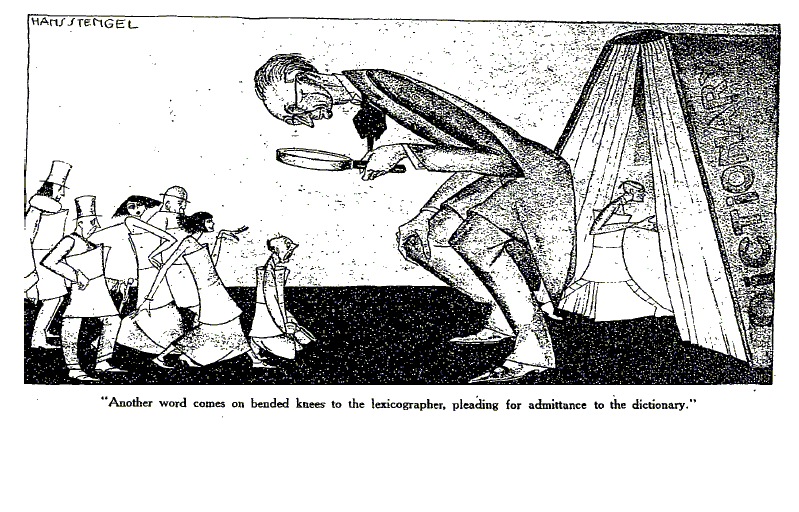
Lexicographers themselves are quick to dispel this notion of The Dictionary as ultimate authority.
Hartman's Law confirmed again:
So watch those fake Latin plurals -- you too might be "exiled for euer out of all Grammar; and all false Latine ... euer after confiscated to [your] vse".
Language Log: A stricter prescriptivism:
As readers of the New York Times now know, we here at Language Log enjoy "coming down hard on rules that ignore linguistic facts," as Michael Erard put it. (...) But we also seek to understand the basis for even the most capricious fiat about language. Perceptions about "proper" usage, no matter how misguided, can still tell us a great deal about how we seek to structure our linguistic consciousness.
There's no battle, Morgan!:
Grant explained to her that these changes do happen in the slowly winding linguistic river, but it's OK as long as there is no flooding over into unintelligibility.
On Prescriptivism:
In the past few years I have encountered a surprising number of examples of people mistakenly condemning an observation or complaint about language use as prescriptivism. In some circles those alleged to be guilty of this sin are known as "grammar nazis". (...)

As I point out below, there are circumstances in which linguistic prescription is perfectly appropriate, but most of the time the term prescriptivism is used in a second sense, one that carries with it a negative value judgment. In this second sense, prescriptivism is criticism of deviation from an arbitrary standard merely because it is deviation. (...)

All too often nowadays I see v., cf., and viz used as if they all meant "see". (...) Now, why is my dislike for the conflation of these three abbreviations not prescriptivism? It is because what I decry is not deviation from a standard merely because it is deviation but because it results in the loss of a useful distinction. (...)

Finally, let me point out that there are situations in which prescription of language use is entirely appropriate. One is where it is very important that the intended audience fully understand the material and there is significant risk of misunderstanding. (...) Boeing addresses this problem by requiring all of its manuals to be written in a precisely specified subset of English, one that allows only certain words and certain constructions to be used. (...) This ensures that mechanics with a certain level of proficiency in reading English will be able to understand the manuals without confusion.
Evil:
And linguists don't recommend performance errors, though we sometimes study them. (...) Some prescriptive advice deals with style, tone, or communicative effectiveness. Advice of this sort may be right or wrong, useful or useless, but it's not evil. Here at Language Log,we often have advice of this kind to offer, though we're careful to distinguish linguistic norms from stylistic preferences. (...) In our discussions of eggcorns, snowclones, overnegations, linguifications and so forth, it's clear that we're talking about violations of lexical, syntactic, semantic or stylistic norms. We don't recommend such violations, though we often enjoy them. (...)

As far as I can tell, the way to help kids master the orthographic, lexical, grammatical and stylistic norms of English is to make sure that they have plenty of good examples to follow, and plenty of practice in following them. My own parents sometimes corrected my spelling and my typographical errors (...)
How to defend yourself from bad advice about writing:
I've given up, for the moment, on wishing that people would use grammatical terminology in a coherent way, and instead, I'm asking myself whether any of this writing advice makes any sense. Specifically, I wonder whether there's any evidence that a narrative is better if it has a higher proportion of verbs that denote actions, whose subjects are human agents.
Stupid wild over-the-top anti-linguist rant:
I glory in the English language, study its complex syntax with great interest, write books on it, and insist on my students writing it accurately and correctly.
I have different determiner constraints so you're awful:
I am not saying that claims about grammaticality rest on or can be justified by statistical facts about what occurs in actual usage (despite the rational assumption that a hell of a lot of the the material written by native English speakers is likely to be the sort of material native English speakers find grammatical). Of course there can be very frequent sporadic errors; I deliberately put one into the preceding sentence just to see if you would notice.
Amid this vague uncertainty, who walks safe?:
We believe in making value judgements about language use: some writers are better than others, and even good writers sometimes make poor choices and outright mistakes. But we also believe in the value of facts, both about linguistic history and about current usage. We're unwilling to accept the assertions of self-appointed linguistic authorities about what is "right" and "wrong" in standard formal English, if these assertions conflict with the way that the best writers write.
The social psychology of linguistic naming and shaming:
Social annoyance and public griping reinforce one another. By social annoyance I mean a distaste for the way someone looks or acts that sees its object as an instance of a type. (...) You associate the irritant with some salient combination of social features: race, ethnicity, age, sex, class, location, occupation, clique. By public griping I mean the process of sharing your annoyance with a sympathetic group. (...)

These days, those accused of offending against these odd, artificial norms are as likely to be high-status people (...) as members of (linguistically) lower-status groups (...).
Horace and Quintilian on Correct Language:
But that doesn't mean that linguistic norms and evaluation of usage didn't exist before that time [18th century], or that people didn't use legal and ethical metaphors in talking about such things.
The social psychology of linguistic naming and shaming:
Although people have been worried about correct speech for thousands of years, it's apparently the status anxieties of modern societies that create the market for usage advice in which artificial "rules" can spring up and spread, independent of the genuine norms of speaking and writing.
Language Log is strong (it's not "the Language Log", just "Language Log" -- which means I was wrong before):
True, I did just recommend using the correct name for our site, so I am making a point about what your future writing behavior should be, if you want to fall into line with the usual practice among those who know the correct name of our site. (...)

Being anti-prescriptivist doesn't mean refusing to admit that there can ever be such a thing as a linguistic mistake. It means being interested in what's a mistake and what isn't, rather than bull-headedly sticking with ideas of correctness that cannot possibly be correct. (...) Of course some sequences of words are correct Standard English and others are not. But of course that doesn't mean something can be ungrammatical in Standard English despite the fact that all educated speakers take it to be grammatical and normal usage.
Authoritarian rationalism is not conservatism:
There are several dimensions involved in attitudes towards linguistic norms, and these have become oddly (and sometimes irrationally) tangled with political labels and allegiances. In the particular column that I quoted, Kilpatrick seems to support a particular type of authoritarian rationalism that is often associated with those on the left who believe that society can and should be reorganized along logical lines whose justice and benefits are obvious to them. Such people believe that everyone should be compelled to obey certain "rules", because -- they assert -- these rules are logically correct, even -- or perhaps especially -- if most people have always behaved differently.

In linguistic matters, however, contemporary "liberals" tend to be more like libertarian conservatives, who believe that it's generally best to let social groups evolve their own norms, without central planning. For such people, the first thing to ask about a contested usage are "what are the historical precedents and the current patterns of behavior?"
Prescriptivist Science:
Is there any "prescriptivist science"? Could there be any? The reaction of some linguists will be that "prescriptivist science" is as much as a contradiction in terms as "creation science" is. But I disagree. (...) The scholars also prescribe, after all, it's just that their recommendations are based on a rational analysis of the facts. (...) Instead, I want to look at the kind of rational investigation that we call "experimental science". (...)

Modern experimental techniques make it easy to test hypotheses about "clarity" and "ease of comprehension" and "reader confusion" and so on. If the measure is some sort of reaction time, you don't even need any apparatus beyond ordinary personal computers. So have at it, all you prescriptivists usage cranks language mavens. I'll be happy to join you in advising against splitting infinitives or stranding prepositions or using summative which and this, if you can provide sound experimental evidence that these practices cause significant problems for readers.
Motivated punctuational prescriptivism:
Jones reminds us that there can be such a thing as an intelligently supported prescriptive recommendation about syntax and punctuation. (...)

Ultimately, I think linguists would in general favor a return to cautious, revisable, and evidence-based criticism of prose structure. It is wildly wrong to think (as so many in the vulgar prescriptivist tradition seem to think) that descriptive linguists favor anarchy in usage and abandonment of grammatical standards. Theoretical syntax stands or falls on the distinction between what is grammatically well formed and what is not
Will need never happen:
I am not saying that my intuition is a gold standard for what goes on in proper English; but on the other hand I am not saying that if something occurs in a few comments on blogs it is therefore correct like everything else that people say or write. (...) Syntactic investigation is difficult. Sporadic slips occur, we know that; but unrecognized but fully regular new constructions develop as well; and presumably at some points we are in a difficult grey area where a sporadic slip has become more than a little frequent and a new construction is starting to grow as a result. Knowing which of these situations one is in is a matter of very considerable epistemological difficulty.


Tuesday, May 17, 2011

When 'anything goes' in linguistics

At the Language Log there's a nice list of posts about the descriptive/prescriptive divide in linguistics, and I will put here excerpts of a few of these articles.
 
English grammar: not for debate:
A case from one of Engand's greatest ever poets, dated 1590, rather puts a damper on the theory that this is a matter of recent sloppiness, does it not? Probably not. I confess I cannot figure out what could convince this man. (...) His view may really be just that he personally dislikes encountering the verb warn without a noun phrase complement. He may be calling it ungrammatical merely to make his personal peeve sound more like an objective opinion.
Logical prescriptivism:
In the case of word formation and its connections to sound and sense, logic is an especially unreliable guide. And of course the English writing system is a complex pattern of overlapping historical layers with sporadic intrusions of reform, for which the appropriate mode of analysis is more geological than logical. (...) This is a sadly undemocratic fact, since it means that no reliable short-cut, in the form of a short list of simple rules, is available to those trying to master a standard language. There's no real alternative to doing a lot of reading and listening.
Usage advice:
There have been a couple of relevant posts over the years, but what this reader really needed was a reminder to check his copy of the Merriam-Webster's Dictionary of English Usage (or the concise edition of the same work). (...) If you don't already own it, you should go buy this book. And just as important, when a question of English usage comes up, it's one of the first places that  you should look for an evidence-based opinion.
The origin and progress of linguistic norms:
There are apparently a few people out there who object to the whole notion of a standard written language, or believe that it's wrong to urge people to learn one; but none of these people post on this site, as far as I know. (Some of our commenters may feel this way, I'm not sure.) At the other end of the spectrum, there are apparently some people who believe that all linguistic varieties that deviate from (someone's idea of) a standard should be ruthlessly suppressed. But most purveyors of usage advice, of whatever species, simply believe that the formal written language should be learned and used in certain contexts;
Contractual Grammar:
There's a presupposition that leaving people to work such things out for themselves is intolerable, either morally or practically, so that the principles must be codified and enforced by some authority.

The alternative — which most modern linguists prefer — is not to treat language as unsystematic or unconstrained, but rather to view it preferentially as a natural rather than an artificial phenomenon, what Hayek called a "grown" or "endogenous" or "spontaneous" order, rather than a "made" or "exogenous" or "artificial" order. (...) In this respect, descriptive linguists are libertarians, or perhaps classical liberals, while prescriptivists are authoritarian rationalists.
Progressive prescriptivism?:
In modern times, it's common for would-be linguistic authorities to pretend that they're holding the line against degenerative change, even when they get the history backwards. But John Dryden initiated the condemnation of sentence-final prepositions on the grounds "that the language, wit, and conversation of our age, are improved and refined above the last". Perhaps this style of progressive prescriptivism influenced some later grammarians to see the be/have change as a step forward into a better future, rather than a symptom of how far kids these days have fallen.
My reading list usually goes to my other, minimalist blog, but this discussion is relevant since in Brazil this is a hot topic: there is a sanctioned textbook defending grammatical errors and saying that otherwise would be prejudice, and neither the author nor the Ministry are retracting. It's one of the Brazilian versions of the "teach the controversy", forgetting that schools are for many the only place where they'll have contact with the language as a subject of inquiry, and are their best opportunity of improving their lives.

Saturday, December 4, 2010

Notable books of 2010 - The New York Times

The Sunday Book Review of the NYT published a list with 100 recommended fiction and non-fiction books. Here is my selection of the books that called my attention and I that I might take a look later. All are non-fiction - or at least try to be - and the links point the respective NYT reviews.
CHRISTIANITY: The First Three Thousand Years. By Diarmaid MacCulloch. (Viking, $45.) MacCulloch traces the faith’s history through classical philosophy and Jewish tradition, fantastical visions and cold calculations, loving sacrifices and imperial ambitions.

COMMON AS AIR: Revolution, Art, and Ownership. By Lewis Hyde. (Farrar, Straus & Giroux, $26.) Hyde draws on the American founders for arguments against the privatization of knowledge.

FOUR FISH: The Future of the Last Wild Food. By Paul Greenberg. (Penguin Press, $25.95.) Even as Greenberg lays out the grim and complicated facts about the ravaging of our seas, he manages to sound some hopeful notes about the ultimate fate of fish.

HITCH-22: A Memoir. By Christopher Hitchens. (Twelve, $26.99.) When the colorful, prolific journalist shares a tender memory, he quickly converts it into a larger observation about politics, always for him the most crucial sphere of moral and intellectual life.

THE HONOR CODE: How Moral Revolutions Happen. By Kwame Anthony Appiah. (Norton, $25.95.) A philosopher traces the demise of dueling and slavery among the British and of foot-binding in China, and suggests how a fourth horrific practice — honor killings in today’s Pakistan — might someday meet its end.

INSECTOPEDIA. By Hugh Raffles. (Pantheon, $29.95.) In this beautifully written, slyly humorous encyclopedia, Raffles seeks to redress the speciesism that has cast insects as creatures to be regarded with distrust and disgust.

THE MIND’S EYE. By Oliver Sacks. (Knopf, $26.95.) In these graceful essays, the neurologist explores how his patients compensate for the abilities they have lost, and confronts his own ocular cancer.

THE PRICE OF ALTRUISM: George Price and the Search for the Origins of Kindness. By Oren Harman. (Norton, $27.95.) Harman surveys 150 years of scientific history to examine the theoretical problem at the core of behavioral biology, sociobiology and evolutionary psychology: Why do organisms sacrifice themselves for the benefit of others?
These are not the only interesting ones, go there and take a look for yourself ;)

Friday, December 3, 2010

ScienceMag New Focus - Science in Brazil

There are three articles in this week's Science magazine penned by Antonio Regalado, talking about current challenges for Brazilian research. This is the same issue where the famous arsenic bacteria were announced. The abstracts follow below.

Brazilian Science: Riding a Gusher (Vol. 330 no. 6009 pp. 1306-1312 DOI: 10.1126/science.330.6009.1306):
Over the past 8 years, Latin America's largest nation has begun to boom. Its economy is growing fast, and it has become a player in world affairs, reveling in an unprecedented bout of self-confidence. It will host the World Cup in 2014 and the Olympics 2 years later. The good times are lifting science, too. Between 1997 and 2007 the number of Brazilian papers in indexed, peer-reviewed journals more than doubled to 19,000 a year. Brazil now ranks 13th in publications, according to Thomson Reuters, having surpassed the Netherlands, Israel, and Switzerland. Brazil's universities awarded twice as many Ph.D.s this year as they did in 2001, and thousands of new academic jobs have opened up on 134 new federal campuses. It's a reversal of fortune for a nation that during the 1990s was beset by dire economic problems. But Brazil is not formidable yet; its scientific output trails its ambitions. The country produces few high-impact papers and only a trickle of patents. Its primary and secondary public education system is in shambles, leaving the nation of 195 million chronically short of technical workers.
Talented But Underfunded: Brazil's Future Scientists (Vol. 330 no. 6009 p. 1311 DOI: 10.1126/science.330.6009.1311):
Twenty-five-year-old Reinaldo Sousa dos Santos is a Ph.D. candidate in biochemistry at the Federal University of Rio de Janeiro (UFRJ) and a resident of Parque União, a crowded favela where residents live under the thumb of a drug gang. Dos Santos owes his journey from shantytown to lab bench to his mentor, Leopoldo de Meis, a 72-year-old professor of biochemistry at UFRJ. In 1985, de Meis began offering a hands-on science course for low-income adolescents called Young Talents. Dos Santos enrolled when he was 14, a year after his father died, leaving him orphaned. Brazil must write thousands more stories like Dos Santos's if it is to overcome deep social divisions and achieve its dream of becoming a major player in scientific research. Many say the task must begin with improving public schools, where poorly paid teachers offer rote lessons.
Tapping a Deep, 'Pre-Salt' Bounty (Vol. 330 no. 6009 pp. 1308-1309 DOI: 10.1126/science.330.6009.1308):
Three years ago, a drill bit struck immense oil deposits deep off the coast of Brazil. Petrobras, the national oil company, tapped undersea fields now estimated to hold about 80 billion barrels of oil and natural gas—about three times the size of the reservoir under Prudhoe Bay, Alaska. It brought the promise of new wealth and expectations that Brazil will climb to the world's top rung of achievement in science and technology. Brazilian President Luiz Inácio Lula da Silva once termed the oil strike "a second independence for Brazil" and promised to use the oil revenue for education and public health. But Brazil's R&D sector has been first to benefit.


LinkWithin

Related Posts with Thumbnails